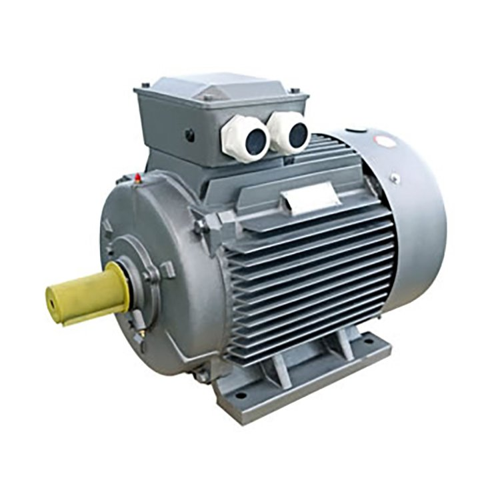
Essential details
Specification Number:YE4
I. Product Fundamentals
Q1: What are the core positioning differences between YE3, YE4, and CMYP low-voltage series three-phase asynchronous motors?
A: All three are low-voltage three-phase asynchronous motors suitable for general industrial scenarios. The core differences focus on energy efficiency and application scenarios: YE3 is ultra-high efficiency (IE3 class), primarily an energy-saving basic model, suitable for conventional industrial power needs; YE4 is super-premium efficiency (IE4 class), with superior energy saving, meeting enterprise energy-saving renovation and "dual carbon" requirements; the CMYP series focuses on low-voltage adaptation, balancing high efficiency and stability, suitable for low-voltage operating conditions requiring specific motor size and installation space.
Q2: What are the rated voltage and frequency ranges for the three motors?
A: All are low-voltage specifications, with conventional rated voltages of 380V, 660V, and 380/660V, and customizable special low voltages like 400/690V; rated frequency is 50Hz/60Hz, supporting variable frequency speed regulation (5-50Hz) to adapt to different load speed requirements.
Q3: What are the frame sizes and power ranges covered by the three motors?
A: The frame size range for all is 80-355 (covering mainstream industrial frame sizes); the power range is 0.55kW-315kW, capable of meeting power demands from small equipment to large production lines, with some special power ratings customizable.
Q4: Besides energy efficiency, what are the other core differences between the CMYP series and the YE3 and YE4 series?
A: The CMYP series is more focused on low-voltage scenario adaptation, optimizing low-voltage operating stability, with insulation and protection classes customizable according to low-voltage operating conditions; the YE3 and YE4 series focus on general energy saving, with structural designs more closely matching traditional Y and YX3 series motors for replacement, allowing direct replacement of traditional Y series and YX3 series motors with the same frame size.
II. Selection and Adaptation
Q1: How to choose between the YE3 and YE4 series? What is their cost-effectiveness?
A: Prioritize energy-saving needs and budget: for ordinary energy-saving renovations and conventional operating conditions, choose YE3 (IE3 class) for higher cost-effectiveness, meeting basic energy-saving and compliance requirements; for high-energy-consuming scenarios and long-term continuous operation (e.g., fans, pumps), choose YE4 (IE4 class). Its efficiency is 3%-5% higher than YE3, and the price difference can be quickly recouped through long-term operation, meeting high energy-saving demands.
Q2: What specific scenarios is the CMYP series suitable for?
A: It is suitable for low-voltage power supply scenarios and is widely used in machine tools, fans, pumps, conveyors, packaging equipment, small production lines, etc. It is particularly suitable for scenarios with low-voltage power supply in workshops, requiring specific motor sizes, and needing to balance high efficiency and stable operation. It can be used as auxiliary power equipment in industries such as mining, chemical, and grain and oil processing.
Q3: Can the three motors directly replace traditional old motors?
A: Yes. The YE3 and YE4 series have the same mounting dimensions as traditional Y, Y2, and YX3 series motors for the same frame size; the CMYP series has dimensions compatible with YE3 and YE4 for the same frame size, allowing direct replacement without modifying equipment foundations, significantly shortening the renovation cycle.
Q4: What installation methods do the three motors support?
A: All support multiple installation methods such as IMB3 (horizontal), IMB5 (flange), and IMB35 (horizontal + flange), allowing flexible selection based on on-site equipment layout to adapt to different installation scenario requirements.
III. Performance and Usage
Q1: What are the protection and insulation classes of the three motors?
A: The standard protection class is IP55, offering excellent dust and water resistance, suitable for dusty and slightly humid conditions; the insulation class for all is F (assessed by B-class temperature rise), using high-permeability, low-loss cold-rolled non-oriented silicon steel sheets, ensuring reliable high-temperature resistance and insulation performance, extending motor lifespan.
Q2: What are the requirements for motor noise and vibration during operation?
A: Stable operation, with noise controlled below 85 decibels. The vibration value for 2-pole motors is as low as 1.5 mm/s. Optimized electromagnetic design and rotor structure effectively reduce vibration and noise, making them suitable for workshop scenarios with high operating environment requirements.
Q3: Do the three motors support variable frequency operation? Do they require additional modifications?
A: All support variable frequency operation without additional modifications. They have built-in variable frequency adaptation characteristics, a wide speed regulation range (5-50Hz), allowing stepless speed adjustment to adapt to different load operating requirements, with rapid start/stop and suitability for frequent acceleration/deceleration conditions.
Q4: What are the limitations of the motor's working environment?
A: Conventional working temperature is -15℃ to +40℃, with customizable -25℃ ultra-low temperature start configurations; altitude is ≤1000m (customizable for high altitudes); humidity is ≤95% (non-condensing), with customizable WF1/WF2 anti-corrosion configurations, suitable for harsh conditions such as high temperature, high humidity, and strong corrosion.
IV. Maintenance and Support
Q1: Is the maintenance difficulty of the three motors high? What should be paid attention to in daily use?
A: Maintenance is convenient. Bearings below frame size 280 are sealed and maintenance-free, eliminating the need for frequent lubrication; daily maintenance only requires regular cleaning of motor surface dust, checking terminal connections, and avoiding overload operation to ensure stable operation and reduce maintenance workload.
Q2: What is the product warranty period? How are faults handled?
A: The warranty period is 18 months from the date of ex-factory. Non-human damage is eligible for free repair or replacement of parts; in case of faults, contact our technical personnel for professional technical support throughout the process, rapid fault diagnosis, and ensuring production continuity.
Q3: What is the approximate service life of the motors?
A: Using high-quality materials and precision manufacturing processes, with normal use and regular maintenance, the service life can reach over 10 years. The specific duration may vary slightly depending on operating condition intensity and maintenance frequency.
V. Customization and Delivery
Q1: What customization requirements do the three motors support?
A: Customizable options include special voltage, pole number, power, ultra-low/high temperature start configurations, anti-corrosion coatings for strong corrosive environments, encoder and brake accessories, special protection classes, stainless steel casings, etc. Requirements need to be communicated in advance, and a technical agreement must be signed.
Q2: What are the delivery times for standard and customized models?
A: The delivery time for conventional power/frame sizes (0.55kW-160kW) is 2-4 weeks; the delivery time for special customized models is negotiable and adjusted based on the complexity of customization.
Q3: Does the product have relevant certifications? Can it meet project acceptance requirements?
A: It has CCC certification and CQC energy efficiency certification, complying with GB/T standards; optional export certifications such as IECEX, ATEX, and UL are available to adapt to international markets; all certifications are complete and can smoothly pass various safety inspections and project acceptances.
Supplementary Notes: This document is a simplified version from the official website. For specific parameters, selection advice, and customization details, please contact us for consultation. The actual product nameplate and manual shall prevail; the product appearance uses industrial standard anti-corrosion coating and can be customized in color according to requirements, adapting to different workshop environments.


